
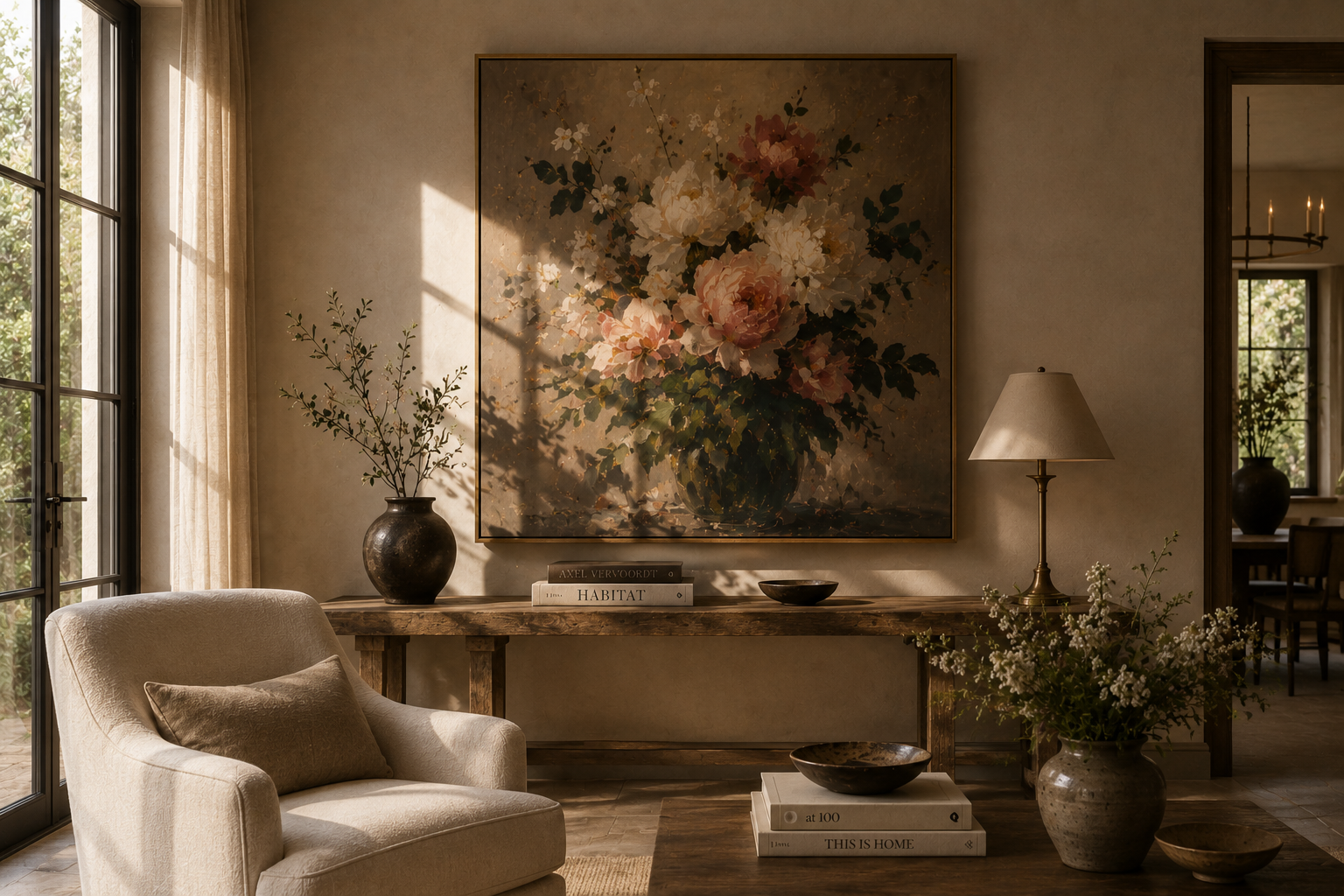
Paintings That Change Through the Day
Some paintings are never exactly the same twice. Morning light reveals one quality. Afternoon warmth reveals another. At dusk, a surface may deepen, soften, or become almost architectural. The work itself has not changed, but the room has changed around it.
This is one of the quiet pleasures of living with original art. A painting does not exist separately from the home. It belongs to the wall, the hour, the season, and the way light moves through the architecture.
When a painting is placed with care, natural light does not simply illuminate it. It becomes part of the experience.
Begin With Soft Light
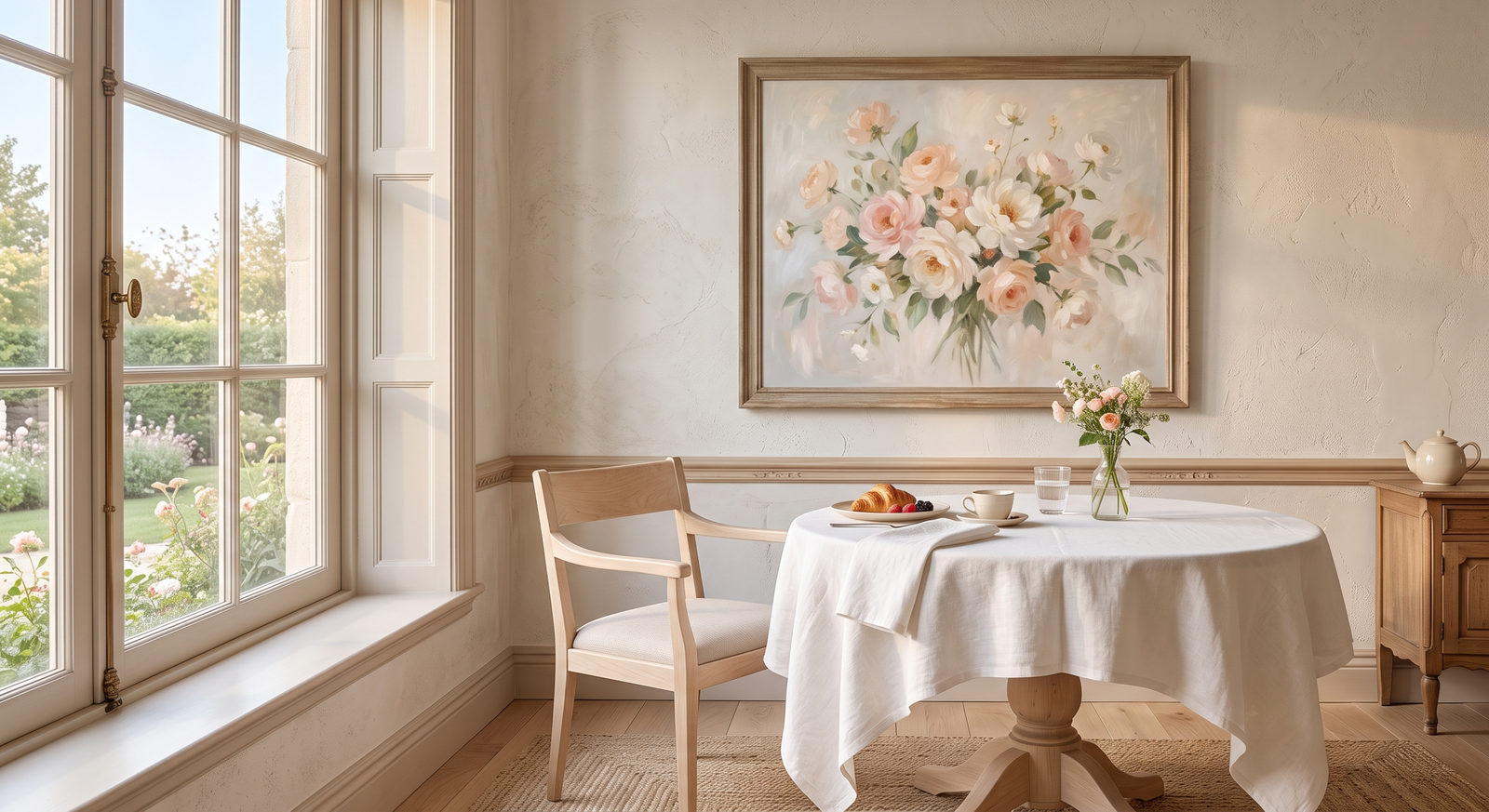
Early light has a softness that can be especially beautiful with paintings that rely on subtle tonal shifts. Pale florals, layered whites, soft blues, gentle greens, and textured neutrals often respond beautifully to the calm of morning. Blue Vase, built on cool blues and a sage ground, reads especially well in a room that gets early light.
In a bedroom, breakfast nook, reading corner, or east-facing room, morning light can make a painting feel fresh without making it feel exposed. The work begins the day gently. Its lighter passages come forward. Its quieter details have space to be seen.
This is less about brightness than atmosphere. A painting in morning light can set the tone for the entire room before anything else has been touched.
Notice the Warmth
As the day progresses, light becomes warmer, lower, and more directional. This can be especially powerful for paintings with saturated colour, expressive brushwork, or darker grounds. Reds become richer. Ochres become warmer. Deep blues and greens can gain depth.
In a living room, library, dining room, or west-facing space, afternoon light can give a painting a more dramatic presence. The work may feel quieter in the morning and more intense later in the day. That shift is part of its beauty.
A painting that changes with afternoon light brings a sense of life into the room. It reminds us that interiors are not static compositions. They are lived environments.
Look for Texture and Shadow
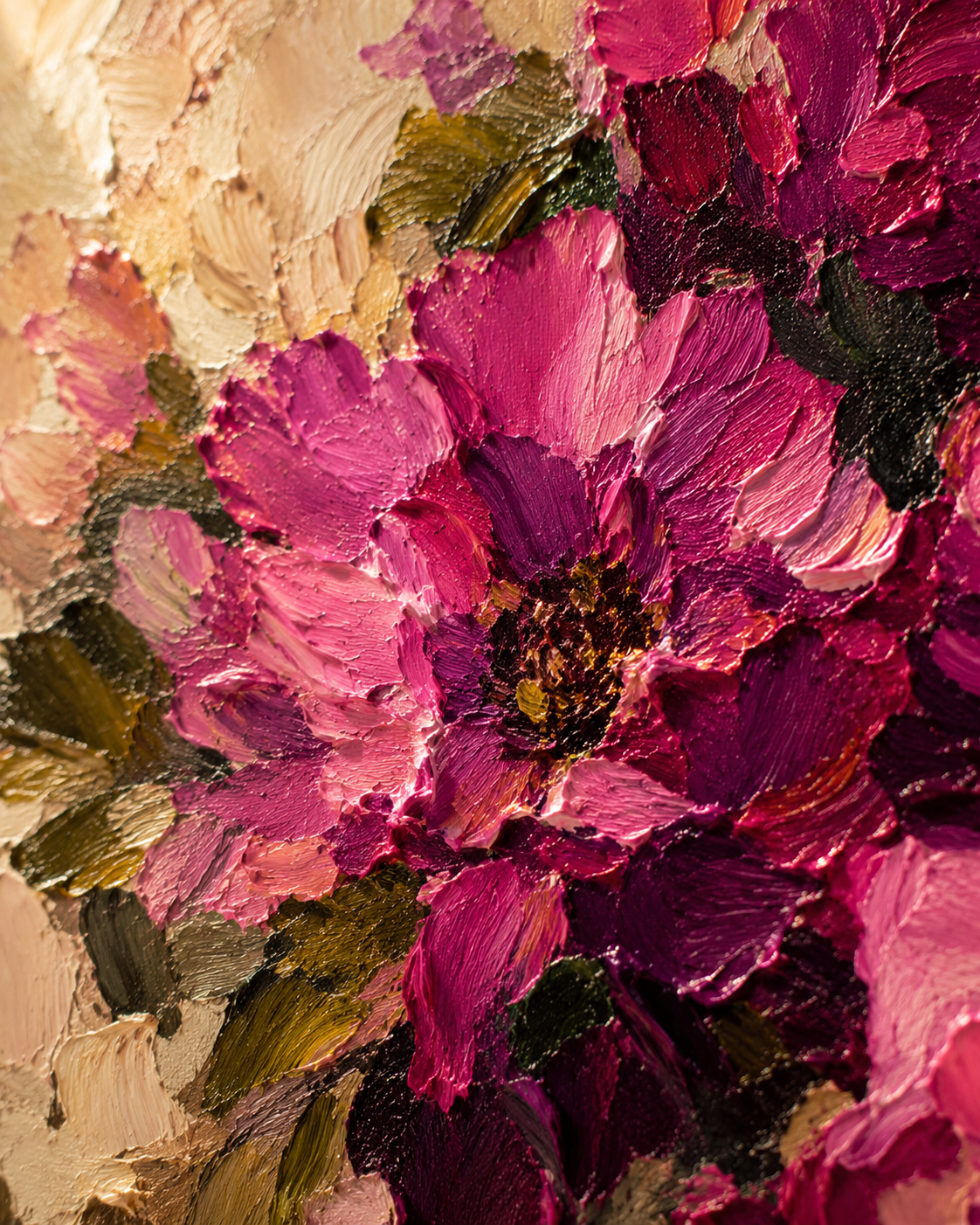
Original paintings carry physical presence. Brushstrokes, layering, glazing, palette marks, and changes in surface all respond to light. These details are often impossible to understand fully in a photograph.
In person, even a quiet painting may have movement across the surface. A raised stroke may catch the light. A darker passage may recede. A thin wash may glow differently at certain times of day. This is part of what separates original art from printed decoration.
The surface is not secondary. It is part of the painting’s life in the room.
Choose the Right Wall
Not every wall is equal. A wall that seems ideal by size may be less successful if the light is harsh, inconsistent, or reflective. Another wall may be quieter architecturally but more beautiful because of the way light touches it throughout the day.
When placing a painting, consider the room at different hours. Notice where light falls in the morning, where it lingers in the afternoon, and where shadows gather toward evening. The best placement is often discovered by observing the room, not by measuring the wall alone.
At Govan & Ghio, art is considered in relation to the interior around it: the architecture, the materials, the furniture, and the changing quality of light. A painting belongs not only to a wall, but to a daily rhythm.
Let the Mood Deepen
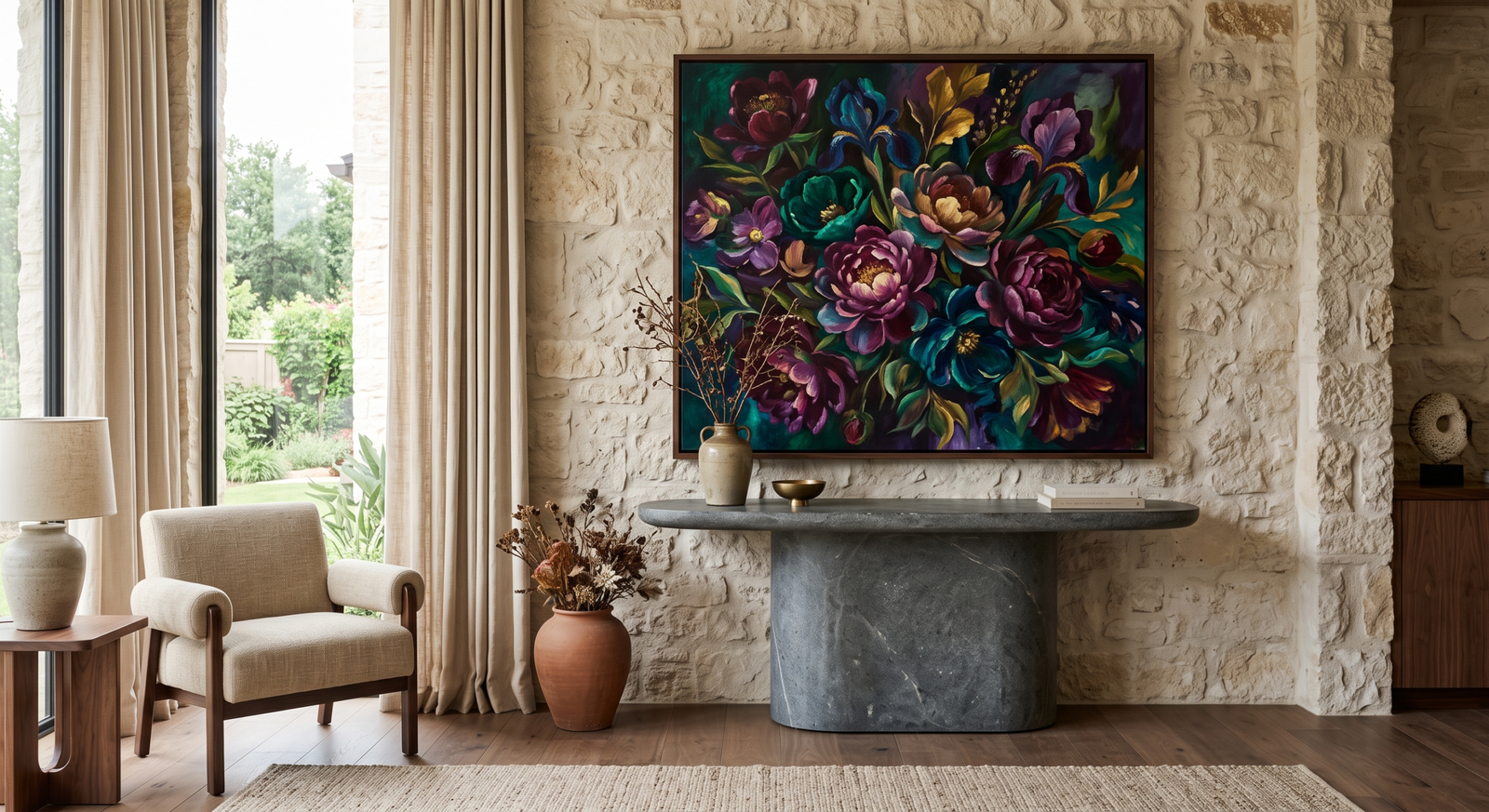
As natural light fades, a painting often becomes less about colour and more about mood. Edges soften. Contrast lowers. Darker passages may become more enveloping. A work that felt fresh in the morning may feel contemplative by evening. Part of that is the shift in colour temperature as daylight gives way to lamplight. A piece with a deep ground — White Blooms on crimson — gains weight as the room dims.
This is when artificial lighting matters. A picture light, soft lamp, or carefully placed wall wash can preserve the presence of the painting without flattening it. The goal is not to over-light the work, but to let it remain alive after sunset.
The most beautiful interiors understand this transition. They allow the room to shift from day to evening without losing its centre.
A painting that changes through the day offers more than one impression. It becomes part of the home’s rhythm, responding to morning softness, afternoon warmth, and the intimacy of evening.
Placed with attention, art does not simply occupy a wall. It participates in the life of the room — quietly, beautifully, and differently each time the light returns.