
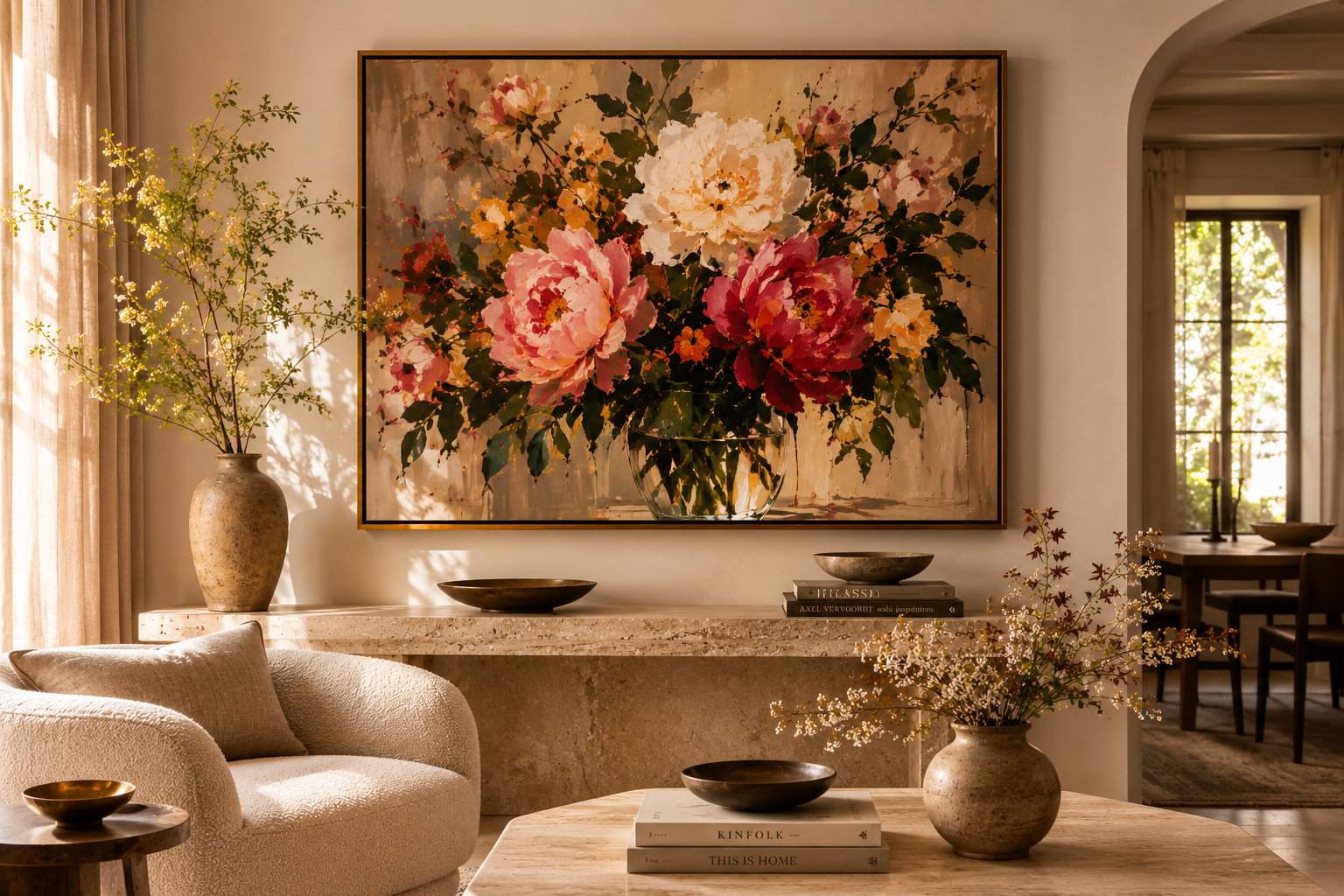
Why Florals Still Work
Floral paintings have never really disappeared. They move in and out of fashion, they change in scale, palette, and interpretation, but the subject itself endures. Flowers remain one of the oldest and most instinctive ways of bringing beauty into a room.
What changes is not their relevance, but the way they are used. In contemporary interiors, a floral painting does not need to feel sentimental, traditional, or overly decorative. It can be bold, restrained, expressive, abstracted, intimate, or architectural.
At their best, florals offer more than prettiness. They bring softness, seasonality, colour, and a human sense of attention into the home.
A Subject That Never Ages
There is a reason flowers have appeared in homes, paintings, textiles, gardens, and ceremonies for centuries. They carry meaning without needing explanation. They suggest care, beauty, abundance, fragility, and renewal. Even when painted in a modern way, the subject remains deeply familiar.
This familiarity is part of their strength. A floral painting does not need to announce itself as intellectual or difficult in order to hold value. It can be emotionally direct. It can soften a room immediately. It can bring life to architecture, warmth to stone, and movement to quiet furnishings.
In a high-end interior, that kind of emotional clarity matters. Luxury is not only about rare materials or perfect proportions. It is also about feeling. A room must invite you to stay.
Bring Nature Indoors
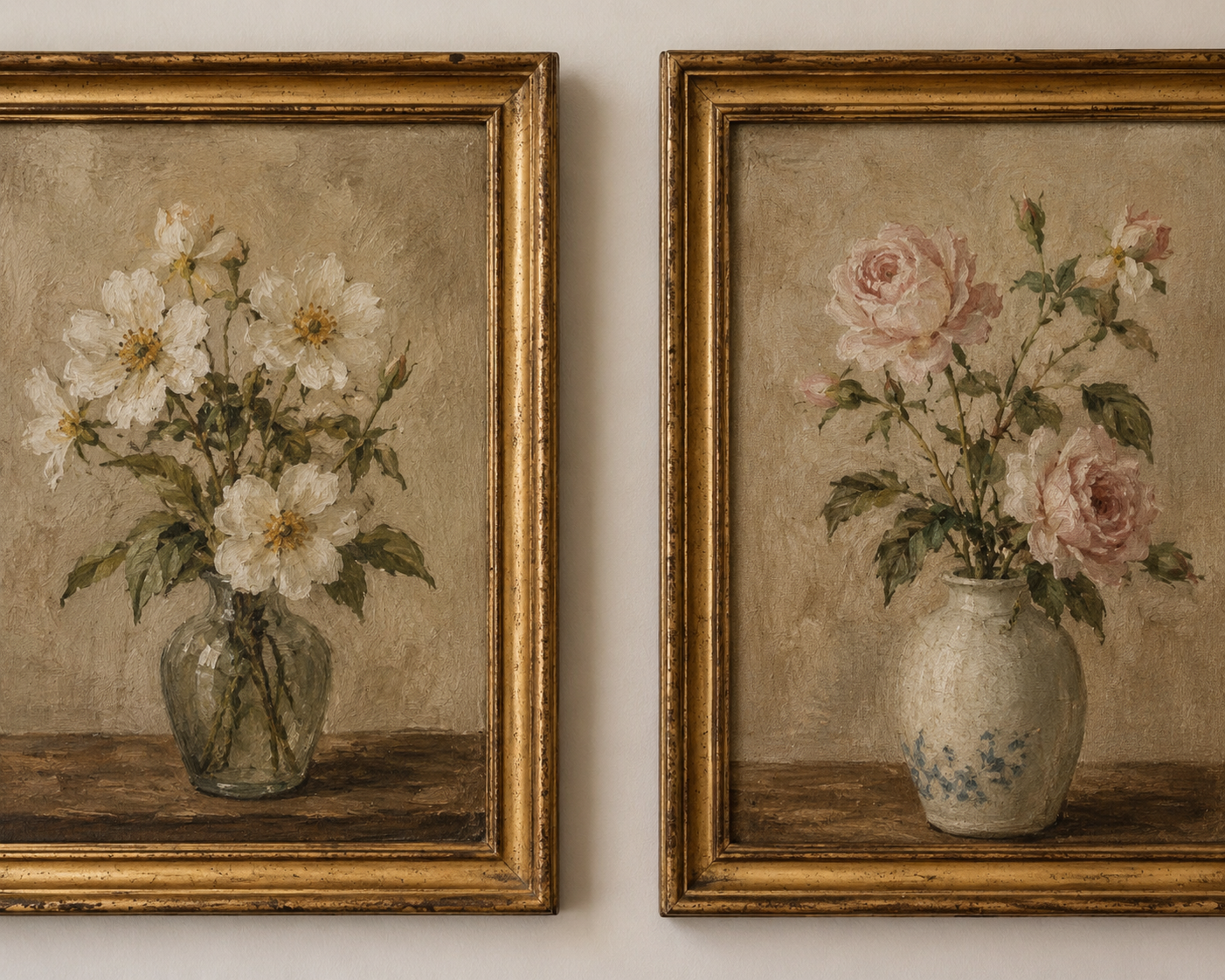
Fresh flowers change a room instantly, but they are temporary. A floral painting offers a more lasting version of that presence. It brings the sensation of nature into the home without requiring constant renewal, without adding visual clutter, and without depending on season.
This is especially powerful in interiors built from strong materials: stone, wood, plaster, metal, glass. These elements give a room structure and permanence. A floral painting introduces the counterpoint. It gives the space movement, delicacy, and breath.
The contrast is often what makes the room feel complete. A rough stone console beneath a soft botanical painting. A walnut dining table beneath expressive blossoms. A quiet bedroom warmed by petals, leaves, and layered colour. The work becomes a bridge between architecture and life.
Florals Can Feel Contemporary
The word floral can sometimes suggest something delicate or old-fashioned, but the painting itself decides the feeling. A floral work with strong composition, generous scale, expressive brushwork, or unexpected colour can feel entirely current.
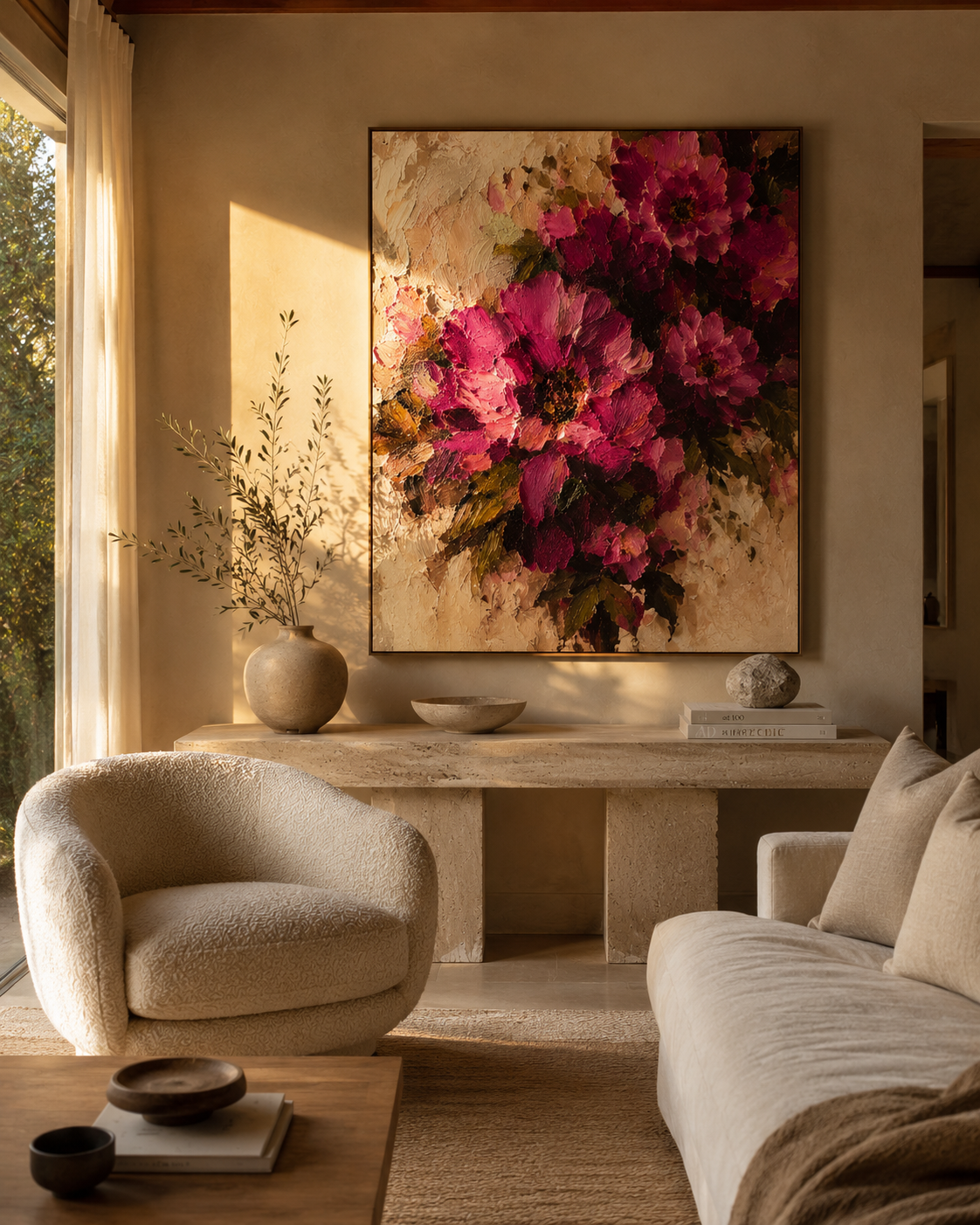
Modern florals often succeed because they are not trying to imitate nature perfectly. They interpret it. Petals become fields of colour. Leaves become movement. A vase becomes structure. Negative space becomes atmosphere. The subject remains recognizable, but the painting belongs to the present. Wild Blooms works exactly this way: the flowers are unmistakable, but the hot pink ground belongs entirely to now.
This is why floral art can work so beautifully in contemporary homes. It brings humanity to clean lines, warmth to minimal rooms, and emotion to spaces that might otherwise feel too controlled.
Let the Room Feel Alive
Some paintings feel like spring. Others carry the fullness of late summer, the richness of autumn, or the quiet of winter branches. Floral work has a natural relationship with time, which is part of why it feels so at home in interiors.
A room does not have to change completely with every season. Sometimes one painting can hold enough seasonal feeling to shift the atmosphere. Pale blossoms can make a room feel lighter. Deep reds and ochres can make it feel warmer. White flowers can introduce calm, clarity, and a certain formality.
At Govan & Ghio, florals are not treated as background decoration. They are considered for the mood they create, the rooms they belong in, and the way they can change the feeling of a home without changing its architecture. Blue Blooms was made for a room with some drama in it; Blue Vase for a quieter one. Both sit in the long line of the still life, reworked for a contemporary interior.
Choose Florals With Presence
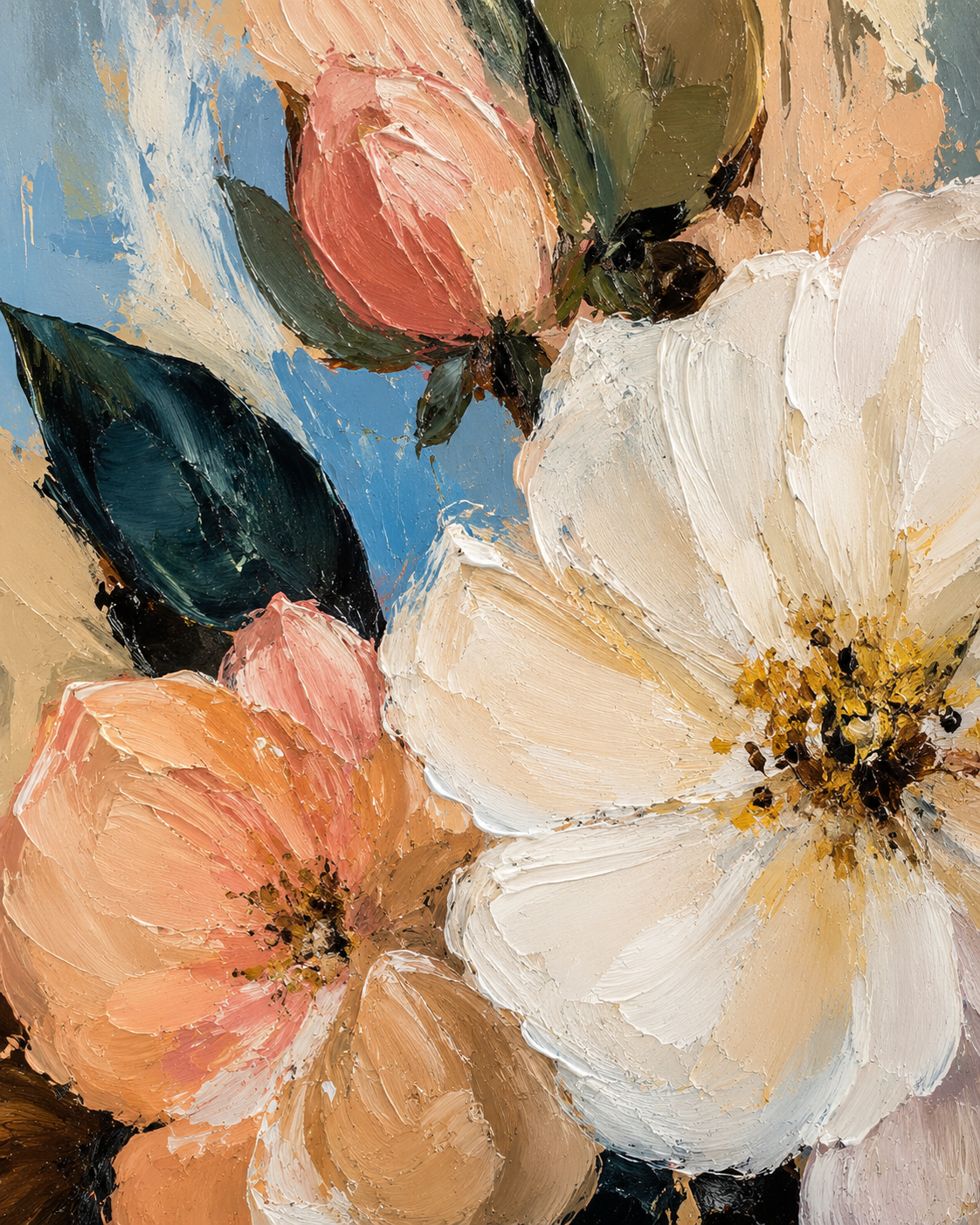
A floral painting should offer more than a pleasant subject. It should have composition, depth, gesture, and intention. The best works do not simply show flowers; they reveal a way of seeing them.
Look for movement in the brushwork. Notice where the painting holds detail and where it lets the eye rest. Consider whether the colour feels alive rather than flat. A strong floral painting should continue to reward attention after the first impression has passed.
That is what allows florals to endure. They are familiar enough to welcome us, but expressive enough to keep unfolding.
Florals still work because homes still need what they offer: softness, colour, life, and atmosphere. They bring the natural world into conversation with architecture, furniture, light, and daily ritual.
Chosen well, a floral painting is not a decorative compromise. It is a timeless gesture — one that can make even the most refined room feel more human.