
The Quiet Power of a Series
A single painting can transform a room. A series can transform the way a room is experienced. When several works are placed together with intention, they create rhythm. They ask the eye to move slowly. They give a wall a sense of structure without making it feel rigid.
This is the quiet strength of a series. It does not need to be dramatic to be memorable. In bedrooms, hallways, staircases, dining rooms, and transitional spaces, a collection of related works can bring balance, intimacy, and a sense of continuity.
The result is not simply more art. It is a more considered way of living with art.
Let the Eye Travel
One of the reasons a series feels so natural in a home is that it mirrors the way we move through rooms. We do not experience interiors all at once. We enter, glance, pause, turn, sit, return. A series supports that rhythm by giving the eye more than one point of attention.
Instead of one large gesture, a group of works creates a sequence. Each piece holds its own presence, but together they form a conversation. The space between them becomes part of the composition. The wall feels alive without feeling crowded.
This is especially effective in rooms that are meant to feel calm. A series can add interest without relying on scale alone. It introduces movement, but not noise.
Create Order Without Formality
There is a difference between symmetry and stiffness. A well-hung series can bring order to a room while still feeling human, expressive, and warm. The key is to let the relationship between the pieces feel deliberate, not mechanical.
Paintings with shared subject matter, palette, scale, or mood naturally belong together. They do not need to match perfectly. In fact, the most beautiful series often contains subtle variation: a shift in colour, a different composition, a change in intensity, a moment of quiet beside a moment of fullness.
That variation is what keeps the arrangement from feeling decorative. It allows the series to feel collected rather than purchased as a set.
Use Series in Personal Rooms
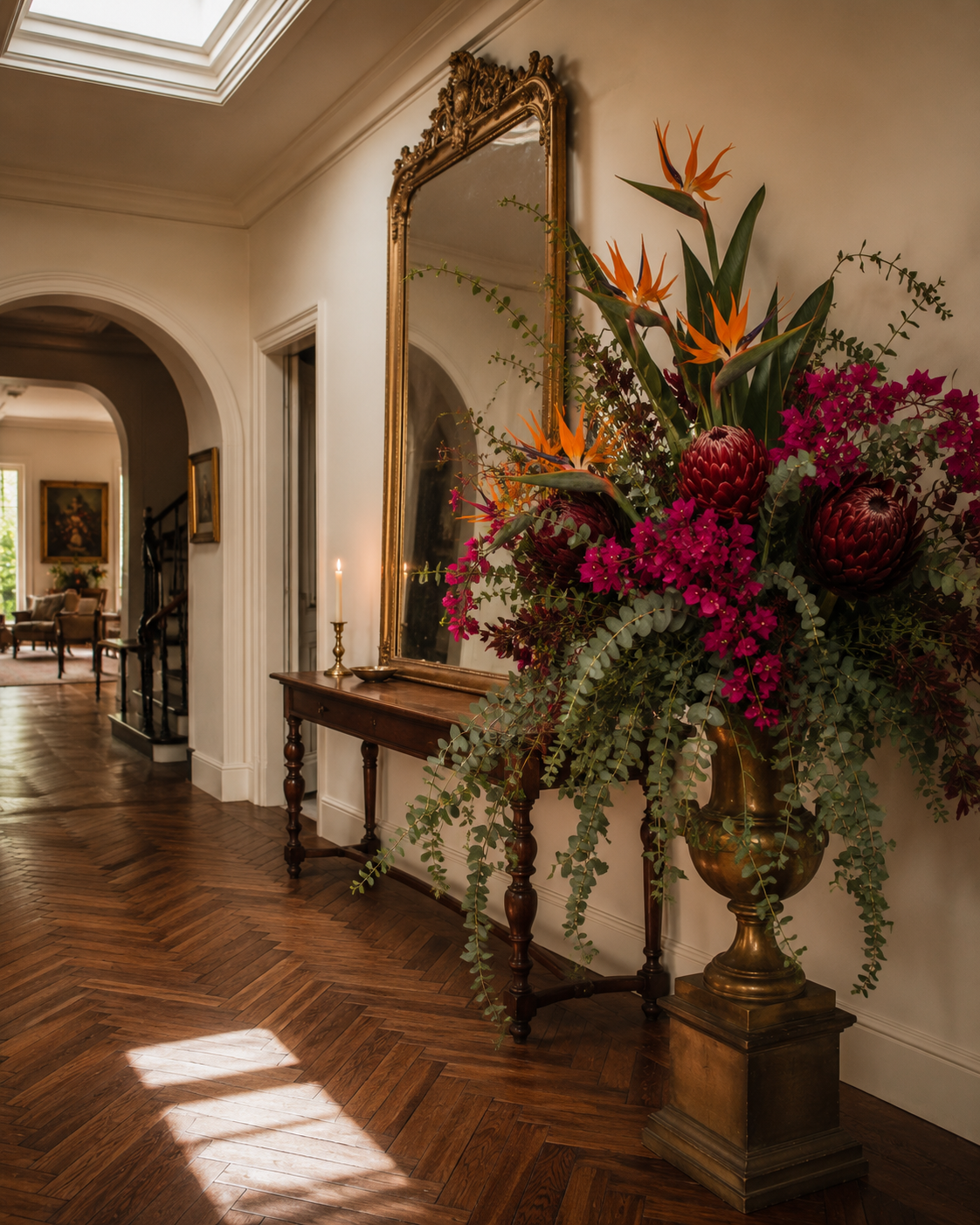
Large statement paintings often belong in spaces of arrival: living rooms, dining rooms, entry halls, and rooms designed to make an immediate impression. A series is different. It often feels most powerful in rooms where the experience is slower and more personal. A single statement piece — Wild Blooms, say — does that arrival work on its own.
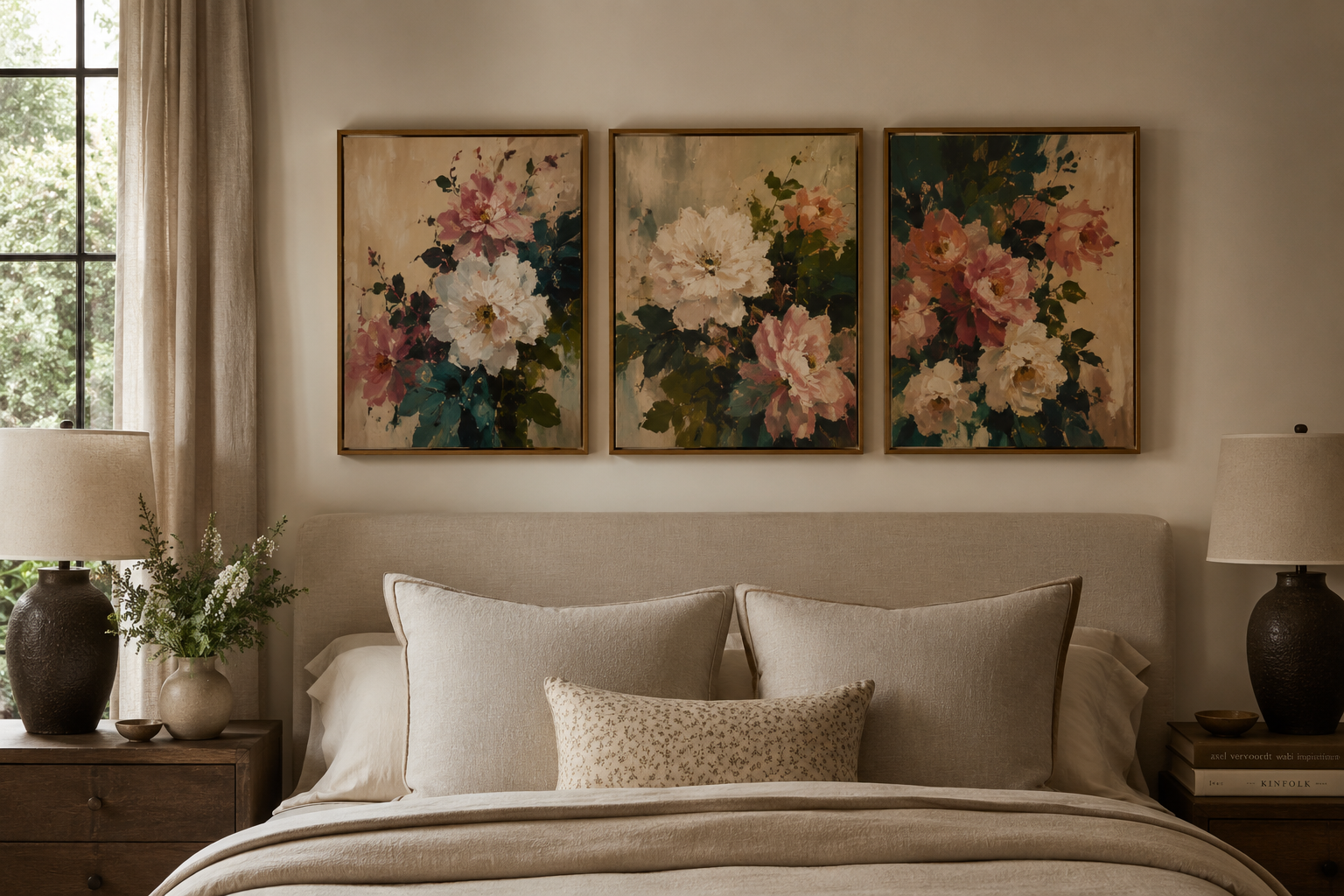
In a bedroom, a series above the bed can create softness and balance without overpowering the room. In a hallway, it can turn transition into ritual. On a staircase, it can create a gentle procession. In a reading corner or dressing area, smaller works can feel private, almost like pages in a visual diary.
The intimacy comes from proximity. A series invites closer looking. It rewards daily attention. One piece may become familiar first; another may reveal itself later.
Let the Works Speak to Each Other
A series is never only about the individual pieces. It is about the relationship between them. One painting may feel bold, another restrained. One may hold the darkest note, another the lightest. One may carry movement while another offers stillness.
When these relationships are considered, the wall gains depth. It feels curated rather than filled. The paintings do not compete for attention; they create a shared atmosphere.
At Govan & Ghio, this is one of the pleasures of placing artwork in interiors. The question is not only whether a painting is beautiful on its own, but how it changes when it is placed beside another work, within a room, under a certain quality of light. The polyptych has worked this way for centuries. You can see how the current works sit beside one another across the full collection.
Think in Groups, Not Gaps
Some walls resist a single artwork. They may be too long, too narrow, too close to furniture, or too connected to movement through the home. In these cases, a series can be more elegant than one oversized piece.
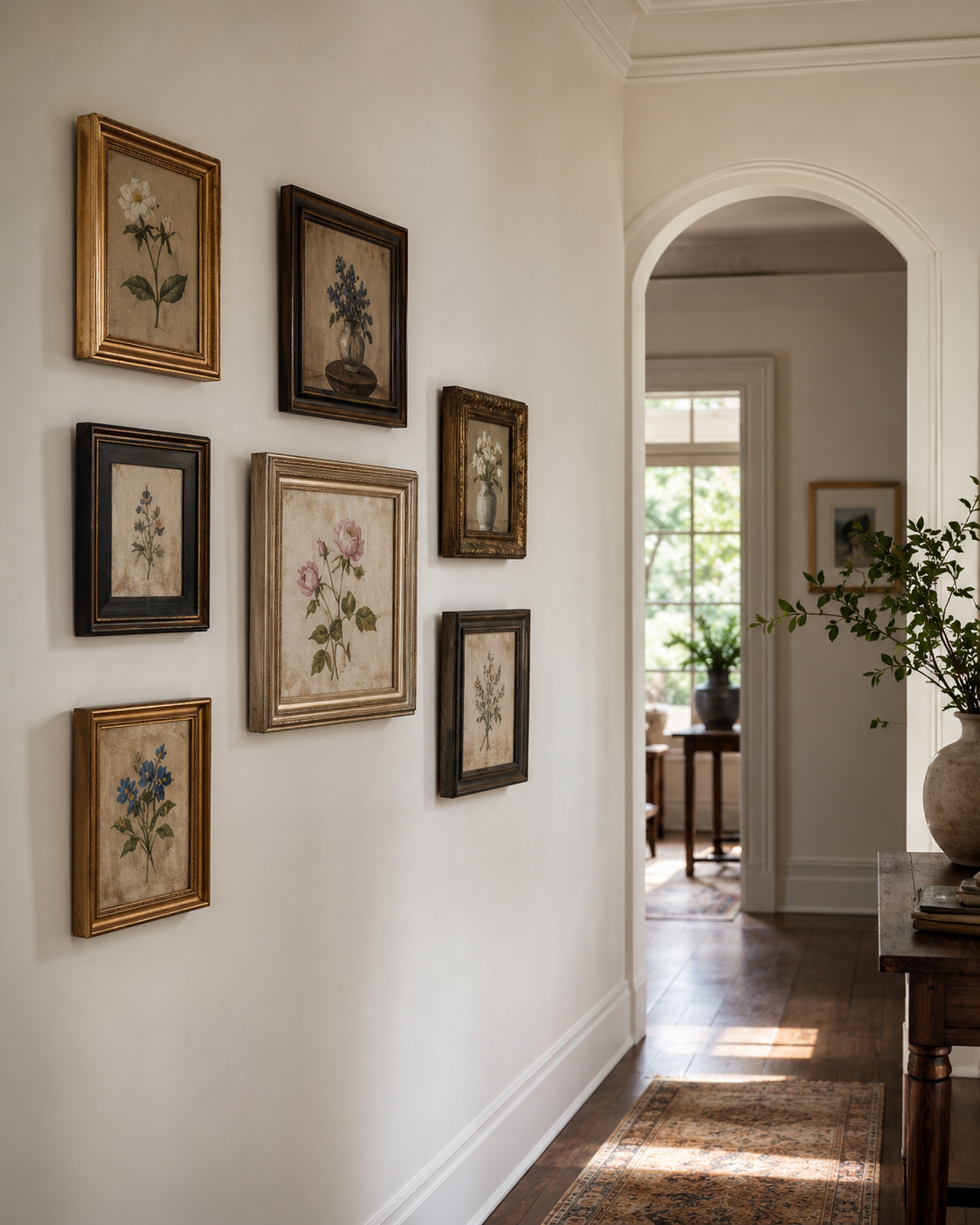
Several smaller works can fill a wall with grace while preserving lightness. They can respond to architectural proportions more sensitively than a single large rectangle. They can also give the room a collected quality, as though the home has developed over time.
This is where a series becomes more than an arrangement. It becomes a way of bringing scale, rhythm, and personality into alignment.
The power of a series is quiet, but it is not small. It changes how a wall is read, how a room is felt, and how art becomes part of daily life.
Placed with care, several works can feel more intimate than one grand gesture. They create rhythm, balance, and a sense of attention — the kind of beauty that reveals itself slowly, room by room, glance by glance.